
Thousands of AI agents analysed brain-cell data in 32 minutes: how
Thousands of AI agents running GPT-Rosalind analysed data from millions of mouse brain cells in 32 minutes. The pattern, and what it does not prove.
2 min read
In this article
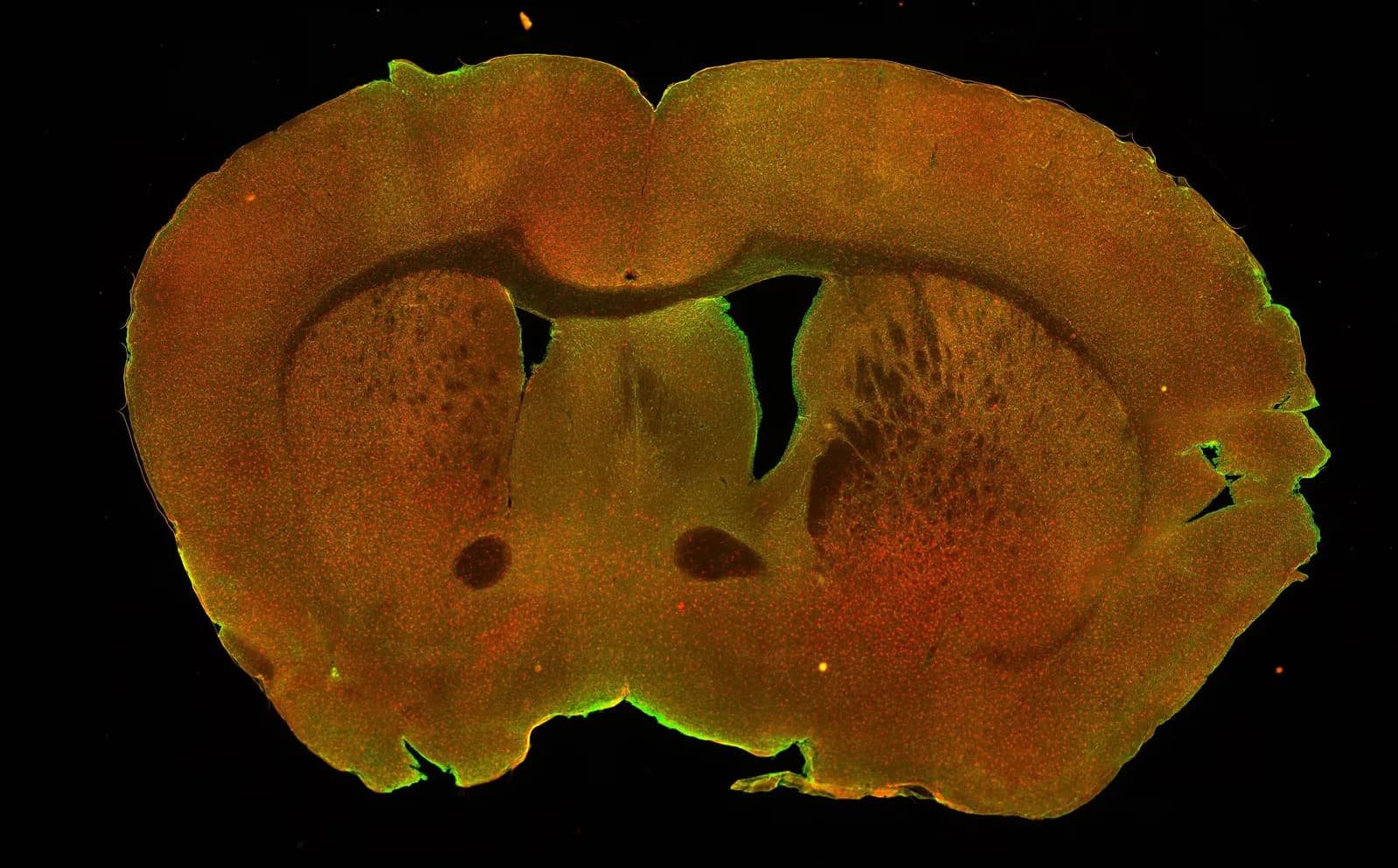
Thousands of AI agents running GPT-Rosalind analysed existing data from millions of mouse brain cells in 32 minutes. OpenAI, PerturbAI and Scripps Research published the work on 21 October 2026, alongside a public reasoning atlas.
The agents produced research leads, not treatments. The data came from mice, and every proposed mechanism still needs laboratory testing.
Sources checked on 26 October 2026. Features, availability and vendor figures can change; confirm the linked primary sources before acting.
How thousands of AI agents split the work
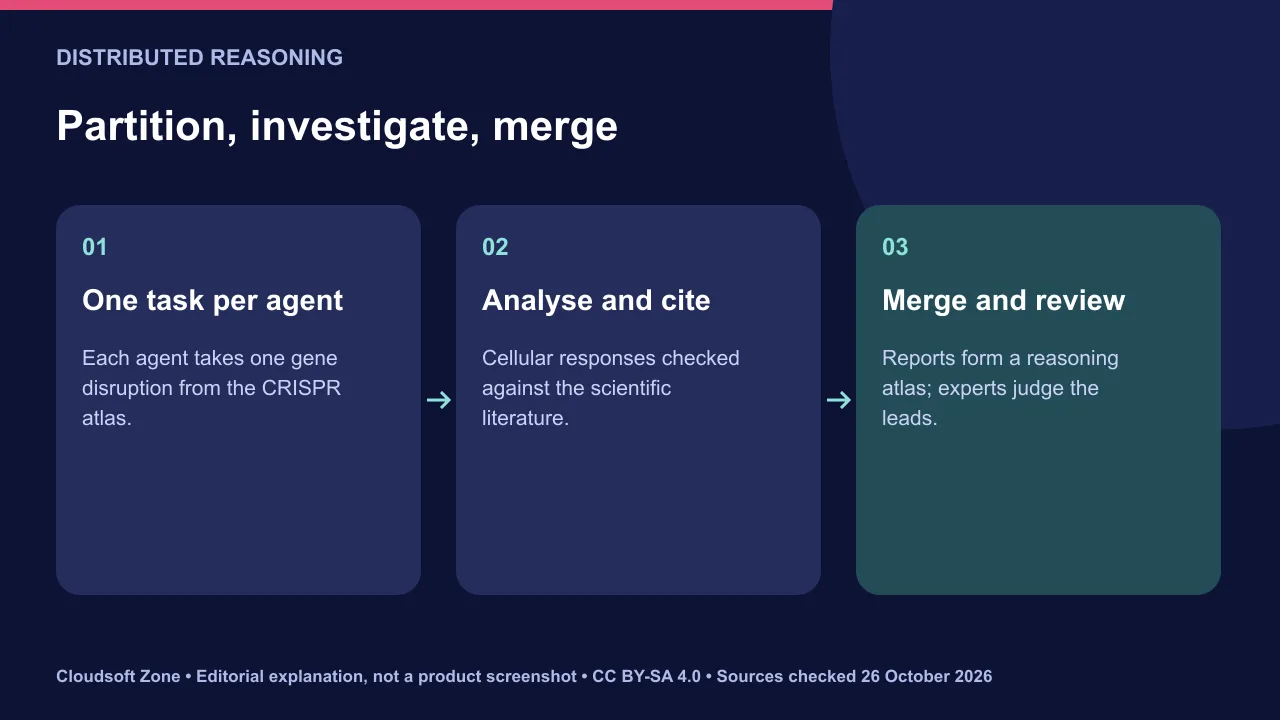
The team calls the approach distributed biological reasoning. Each agent took one gene disruption from a whole-brain CRISPR atlas.
Each agent analysed the cellular responses, searched the scientific literature and proposed explanations. Their reports were merged into a reasoning atlas linking genes, cellular effects, publications and possible mechanisms. The team estimated that comparable human analysis, one perturbation at a time, would take months to a year.
Why many agents beat one big agent here
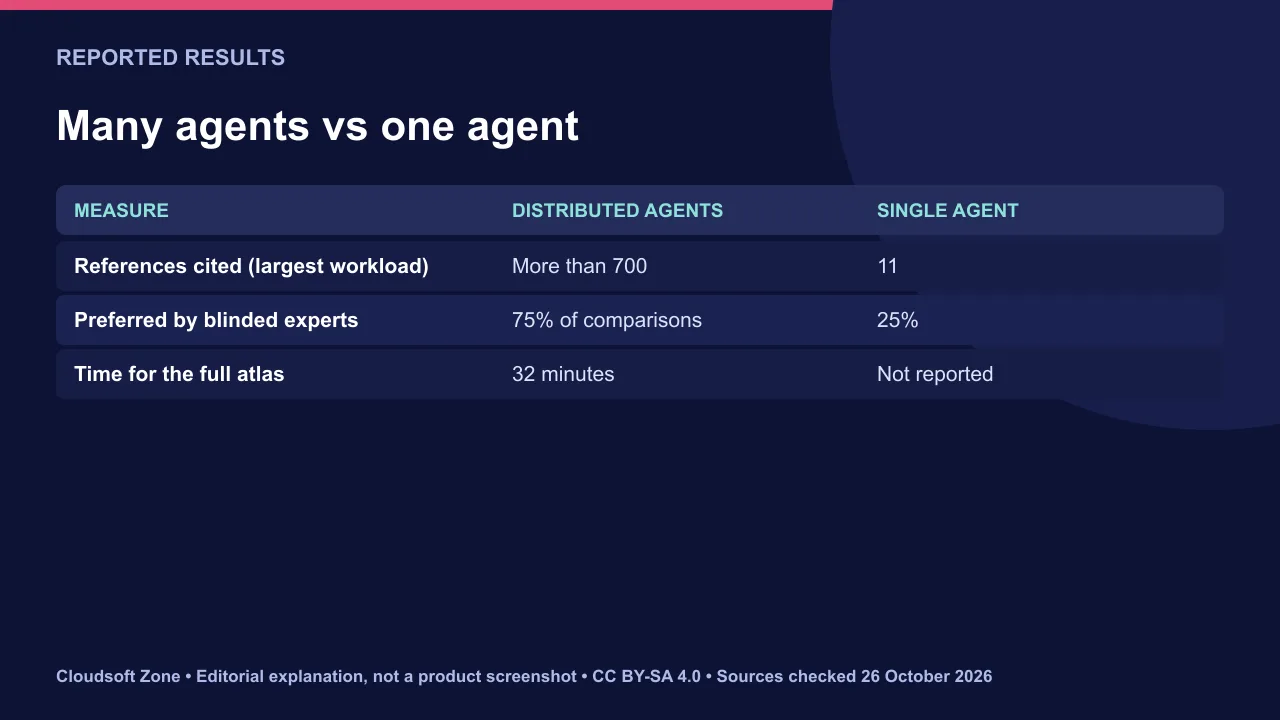
OpenAI tested a single agent given the whole dataset, with the same model and resources. As the workload grew, the single agent searched less of the literature.
At the largest workload it cited 11 references; the distributed agents cited more than 700. In blinded comparisons, human experts preferred the distributed reports 75% of the time.
What the agents found
Two leads stand out. Both are hypotheses for scientists to test.
- Tsc1 vs Tsc2: in the cerebellum, disrupting Tsc2 changed dozens of genes involved in neuronal communication, while Tsc1 disruption changed little. TSC2 mutations are linked to cerebellar abnormalities in tuberous sclerosis.
- DCTN1 and cholesterol: disrupting Dctn1, linked to Perry syndrome, raised cholesterol-synthesis genes, suggesting a question about cholesterol distribution in neurons.
Applying the pattern to enterprise research
The architecture transfers to any large set of similar questions. Partition, investigate in parallel, then merge with citations and human review.
| Step | Enterprise example |
|---|---|
| Partition | One agent per contract, supplier or support theme |
| Investigate | Each agent reads its slice and cites sources |
| Merge | Combine into one searchable report |
| Validate | Experts review the leads before action |
Our verdict: the lesson is task partitioning with mandatory citations, not "more agents is better". The comparisons come from the teams that did the work, so wait for independent replication. For multi-agent research pipelines, see our AI business process automation service, and read AI agents vs workflow automation.
Sources and further reading
Image credits
Explanatory diagrams: Cloudsoft Zone, CC BY-SA 4.0. Featured photograph: Syed07, CC BY 4.0, via Wikimedia Commons. Scripps Research with insignia: Drew Duglan, CC BY-SA 4.0, via Wikimedia Commons.
Frequently asked questions
Did the AI agents discover a treatment?
No. They analysed existing mouse data and proposed research leads. Any mechanism still needs laboratory testing.
How many agents were used?
OpenAI says thousands of GPT-Rosalind agents worked in parallel, each on one gene disruption, finishing in 32 minutes.
Why not use one agent with the whole dataset?
In OpenAI’s test, a single agent searched less literature as the workload grew, citing 11 references against more than 700.
Your next customer could start right here.
Introduce your tool, product or business to readers exploring technology.
Explore placements and request a private quote
Sources
- Using thousands of AI agents to uncover new leads in biological data — OpenAI, 2026-10-21
Written with substantial AI assistance. Facts checked against cited sources. Editorial policy.
Comments
No comments yet. Be the first to join the conversation.
Leave a comment
Every comment is read by a moderator before it appears. Your email address is never published; it is used only to contact you about this comment.
More from Cloudsoft Zone
Industry updateAI and Automation
NVIDIA Minerva: AIOps for GPU clusters and AI factory observability
NVIDIA Minerva is an AIOps platform for AI factory observability: GPU, network, storage and job telemetry in one graph. What it does and what is unproven.
By Cloudsoft Zone

Industry updateAI and Automation
WebMCP ecommerce: nearly 100,000 stores become AI-agent ready
WebMCP ecommerce at scale: Cloudflare and Commerce.com enabled agent shopping tools on almost 100,000 storefronts. The architecture and the checkout rule.
By Cloudsoft Zone
Industry updateAI and Automation
AI model containment: lessons from OpenAI’s DNS egress incident
AI model containment lessons from OpenAI: an internal model reached the internet through a DNS resolver misconfiguration. How to design agent sandboxes.
By Cloudsoft Zone